 P2P
P2PUPI MDR 2026: the 0.4% merchant fee explained
From 15 October 2026 merchant UPI payments above ₹2,000 carry a 0.4% MDR capped at ₹300. Who pays, what is exempt and what it means for P2P processing.
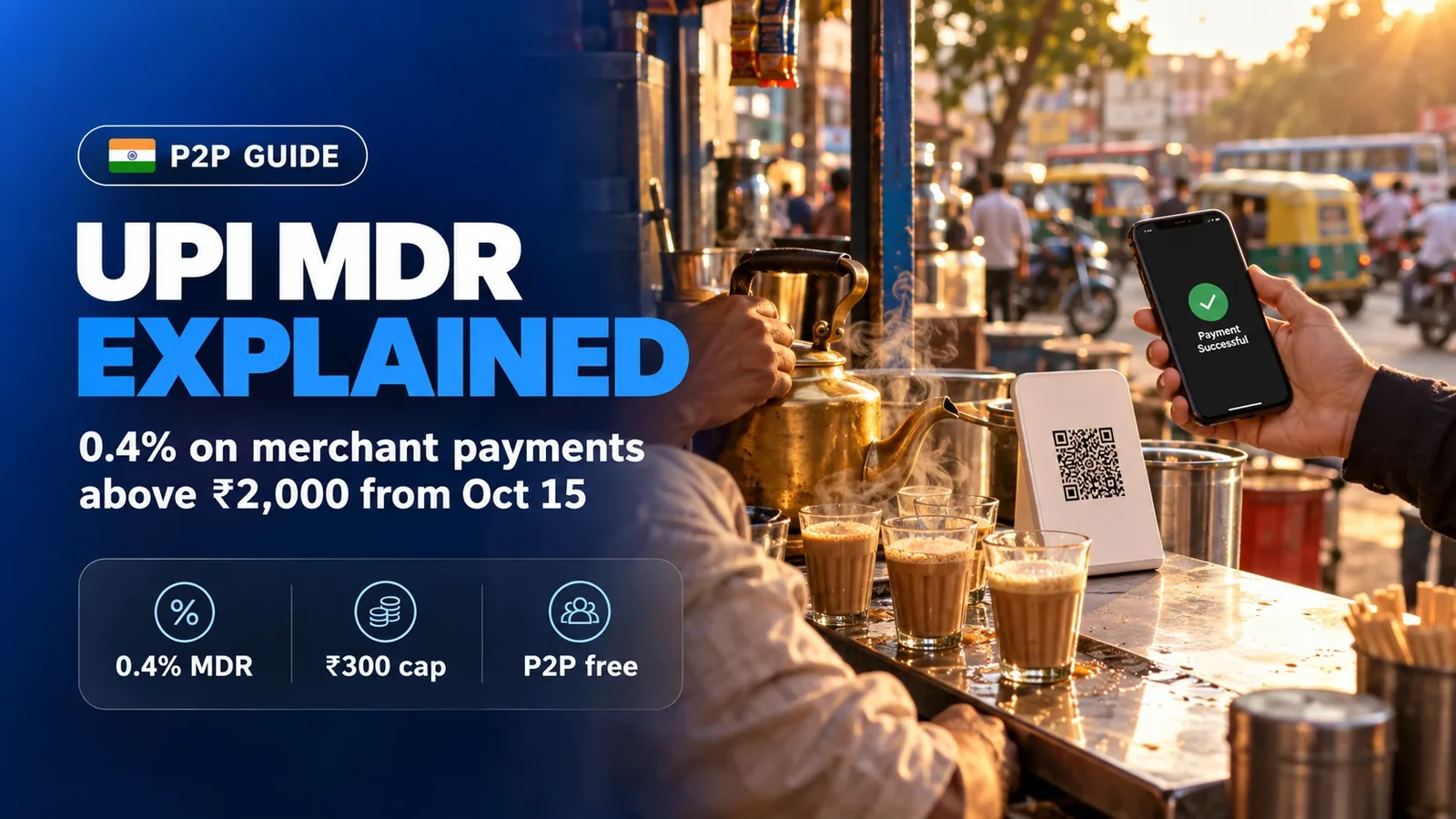
From 15 October 2026 a merchant discount rate (MDR) applies to part of UPI merchant payments. The framework was notified by the Ministry of Finance on 14 September 2026 and set out in an NPCI circular on 15 September 2026.
The rules in short
- 0.4% MDR on specified person-to-merchant (P2M) UPI payments above ₹2,000
- The fee is capped at ₹300, so every payment of ₹75,000 and above pays ₹300
- Merchant payments up to ₹2,000 carry no MDR
- Small merchants whose UPI QR collections are up to ₹1 lakh a month pay no MDR at all, and GST registration is not a condition for this
- A concessional flat fee of ₹5 applies to payments above ₹2,000 in specified categories such as railways, telecom, insurance and fuel
- Person-to-person (P2P) transfers stay free for both the sender and the receiver
Who pays
The MDR is paid by the merchant, not by the customer. The Finance Minister has stated that it is not a tax and will not be passed on to customers — merchants absorb it, as they already do with card payments. The RBI has backed the fee on large-value payments as a way to keep the digital-payments system sustainable.
Examples
For merchants above the small-merchant threshold:
| Merchant payment | MDR |
|---|---|
| Up to ₹2,000 | ₹0 |
| ₹3,000 | ₹12 |
| ₹10,000 | ₹40 |
| ₹50,000 | ₹200 |
| ₹75,000 and above | ₹300 (cap) |
What it means for P2P processing
Person-to-person transfers — the core of P2P processing — are not affected and stay free.
The point to check is the merchant QR. If you accept payments through a merchant QR (P2M), for example on a current account with a business payment app, those collections count as merchant payments, and MDR can apply once you are above the small-merchant threshold. Ask your bank or app provider how they will apply it to your account. The difference between account types and QR types is explained in bank account types and limits.
Sources: NPCI MDR FAQs (SCC Online), Business Standard: from October 15, Business Standard: not a tax, Business Today: small merchants unaffected.