 P2P
P2PCan your bank account be frozen? How to reduce the risk
Why banks restrict accounts used for P2P processing, how the risk is reduced, what the RBI's 60-day debit hold draft changes and what to do if an account is restricted.
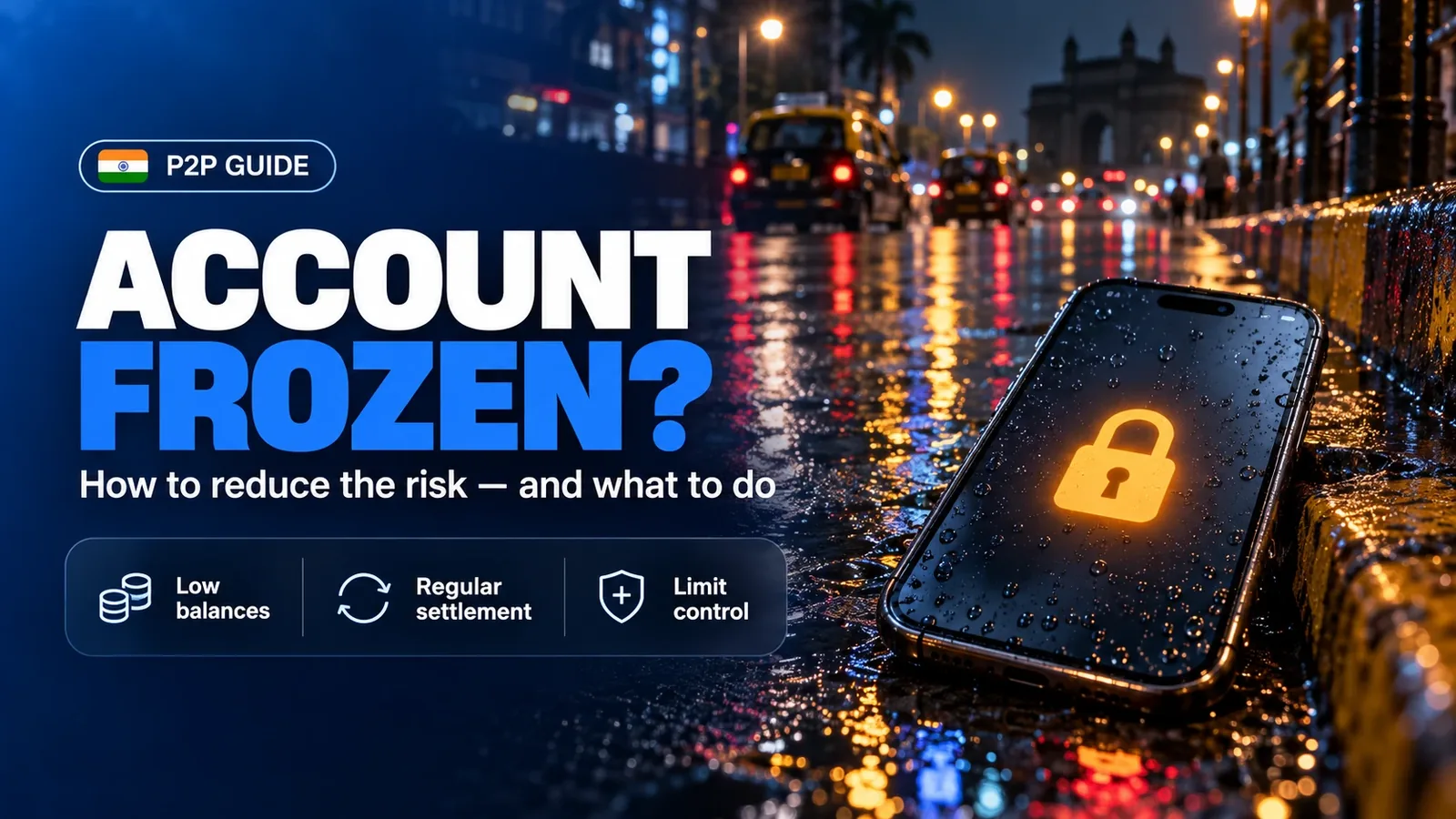
It is one of the most common questions from new traders, and it deserves an honest answer: yes, a bank can restrict an account. The final decision is always made by the bank, and no platform can guarantee that a bank will never ask for additional verification or temporarily limit an account. What can be controlled is the workload — and that makes a real difference.
How the risk is reduced
Bank limits and transaction activity need constant attention. That is why managers help traders track their daily limits and avoid overloading their banking profiles:
- Managers help monitor transaction limits for each bank account
- Working volume is adjusted to the capacity of each trader's banking profile
- Transaction flow is screened before it reaches the trader
- Scam, fraudulent, suspicious or unidentified payment sources are not knowingly accepted
- Traders get instructions on how to process transactions correctly and consistently
Some of the earliest traders have been working with the platforms for more than six months without any banking issues.
Your side of it
- Keep balances low on working accounts — the safe amounts are on bank account types and limits
- Settle regularly instead of letting rupees pile up — see PayIn, PayOut and Settlement
- Stay within the limits your manager sets for each account
- Accept payments only through the approved workflow of your platform
The RBI's 60-day debit hold draft
On 11 September 2026 the RBI published draft rules for accounts that banks suspect of being money mules or of being linked to cyber fraud:
- A bank may place a debit hold of up to 60 days, unless the police or another authority instructs otherwise
- A debit hold blocks payments, transfers and withdrawals out of the account, while money can still come in
- The draft follows a Supreme Court order of 4 August 2026 that asked the RBI to set a standard procedure for such holds
- Comments are open until 2 October 2026; if adopted as drafted, the rules take effect on 1 April 2027, although a bank may apply them earlier
For traders this means a clearer limit on how long a hold can last. The best protection is still not to trigger one.
If an account is restricted
- Stop routing orders to that account and tell your manager straight away
- Contact the bank to find out what kind of restriction it is and why — a debit hold, a full freeze or a check linked to a cyber complaint
- Keep your records: statements, transaction references and screenshots of orders
- Do not try to move the funds out through third parties
This page explains general practice, not legal advice. In your specific case, follow your bank's instructions.
Sources: MediaNama on the RBI draft, Business Standard explainer.